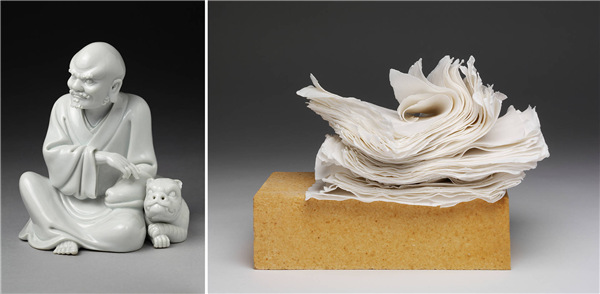
Blanc de Chine
Introduction
Blanc de Chine, also known as "White from China", refers to the distinctive white porcelain produced in Dehua, a county in Fujian province,. This porcelain is renowned for its ivory-white color, smooth texture and elegant finish. The Dehua kilns, where Blanc de Chine originated, have a long history dating back to the Xia and Shang dynasties (c. 21st century-11th century BC). These kilns became prominent during the Song (960-1279), Yuan (1271-1368), Ming (1368-1644) and Qing (1644-1911) dynasties, reaching a peak of production and artistic expression.
Historical Background
The Dehua kilns gained prominence along the Maritime Silk Road, significantly contributing to cultural exchanges between the East and the West. During the Song Dynasty, Dehua porcelain was already being exported globally, as evidenced by the Dehua four-looped jar recovered from the Song Dynasty shipwreck Nanhai One. This artifact, with its bluish-white glaze, illustrates the global reach and historical significance of Dehua porcelain in international trade.
The peak of Dehua porcelain manufacturing occurred during the Ming and Qing dynasties. The Ming Dynasty sculptor He Chaozong, famed for his ability to sculpt Taoist and Buddhist figures with grace and serenity, created some of the most exquisite pieces of Blanc de Chine. His works are characterized by their smooth lines and lustrous glaze, exemplifying the artistry of Dehua porcelain.
Artistic Features
Dehua porcelain is celebrated for its purity, grace and divinity. The figures depicted in Blanc de Chine often include Buddhist subjects such as Guanyin, the Goddess of Mercy, and Maitreya, the Buddha of the future. These figures reflect traditional Chinese beliefs that white porcelain best represents the benevolence of sacred deities.
The artistry involved in creating Blanc de Chine is both intricate and sophisticated. The traditional sintering techniques employed are considered a part of China's national intangible cultural heritage.
Cultural Significance and Global Influence
Blanc de Chine became particularly popular in Europe during the 17th and 18th centuries when it was exported in large quantities via the Maritime Silk Road. Its unique milky-white color and jadelike texture made it a sought-after commodity among European nobility. The porcelain was referred to in French as "Blanc de Chine", a term still in use today.
The influence of Blanc de Chine extended beyond merely being an export product. It inspired major porcelain factories in Europe, such as Meissen in Germany, to develop their own production techniques. The cultural exchange facilitated by Blanc de Chine exemplifies the historical communication between East and West through art and trade.
Contemporary Legacy and Production
Today, Dehua remains a vital center of porcelain production. The county has adapted its traditional techniques to suit contemporary aesthetics, producing both art porcelain and utilitarian items. The region is home to over 3,000 ceramic enterprises, employing more than 100,000 people with a significant annual turnover. Modern Dehua continues to export its porcelain products worldwide, including popular items in theme parks and international retailers.
Exhibitions showcase both ancient and contemporary Dehua porcelain, celebrating its enduring appeal and artistic excellence. The ongoing interest in Blanc de Chine, both as a historical artifact and a contemporary art form, underscores its lasting impact on the global ceramic arts.








